

On the 36th day of the federal shutdown, President Trump boarded Air Force One for Mar-a-Lago, where he and other passengers were served lemon thyme chicken, a side garden salad, pumpkin spice cake bites for dessert and a beverage of choice. At the same time, his administration was appealing court orders to force the funding of SNAP, the decades-old government benefit program established to prevent the starvation of children and mothers from losing their babies to malnutrition in the 1960s.
For 43 days, the Trump administration offered a menu of confusion with few choices left to states as they scrambled to amass emergency resources in the absence of federal funding to manage a furloughed workforce and airline delays. Now, the government has reopened, funds are being released, and the SNAP football game has been paused for now, but the damage being done to the social safety net is far from over.
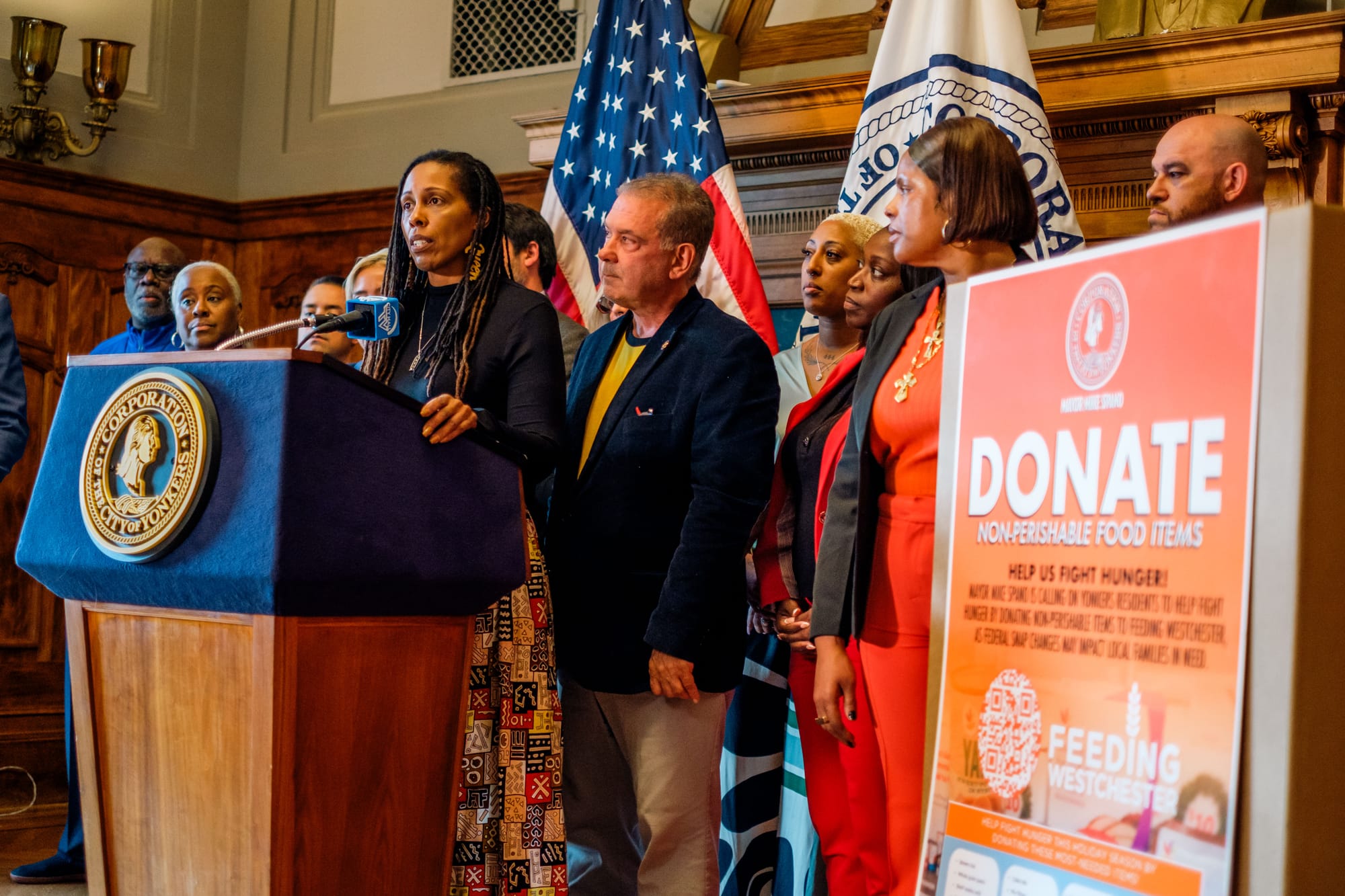
On Friday, Oct. 31st, Mayor Spano announced an initiative with the non-profit Feeding Westchester through November 21st to encourage residents to help bridge the gap.
"We all have been waiting and wondering how the federal shutdown was going to affect daily lives for people right here in our own community," Spano said during the press conference. "This is a state of emergency. This is a political chess game, I know, but you can't play chess with people's lives. In the face of these changes, we're going to have to come together as a community. That's why we're partnering with Feeding Westchester," the mayor said.
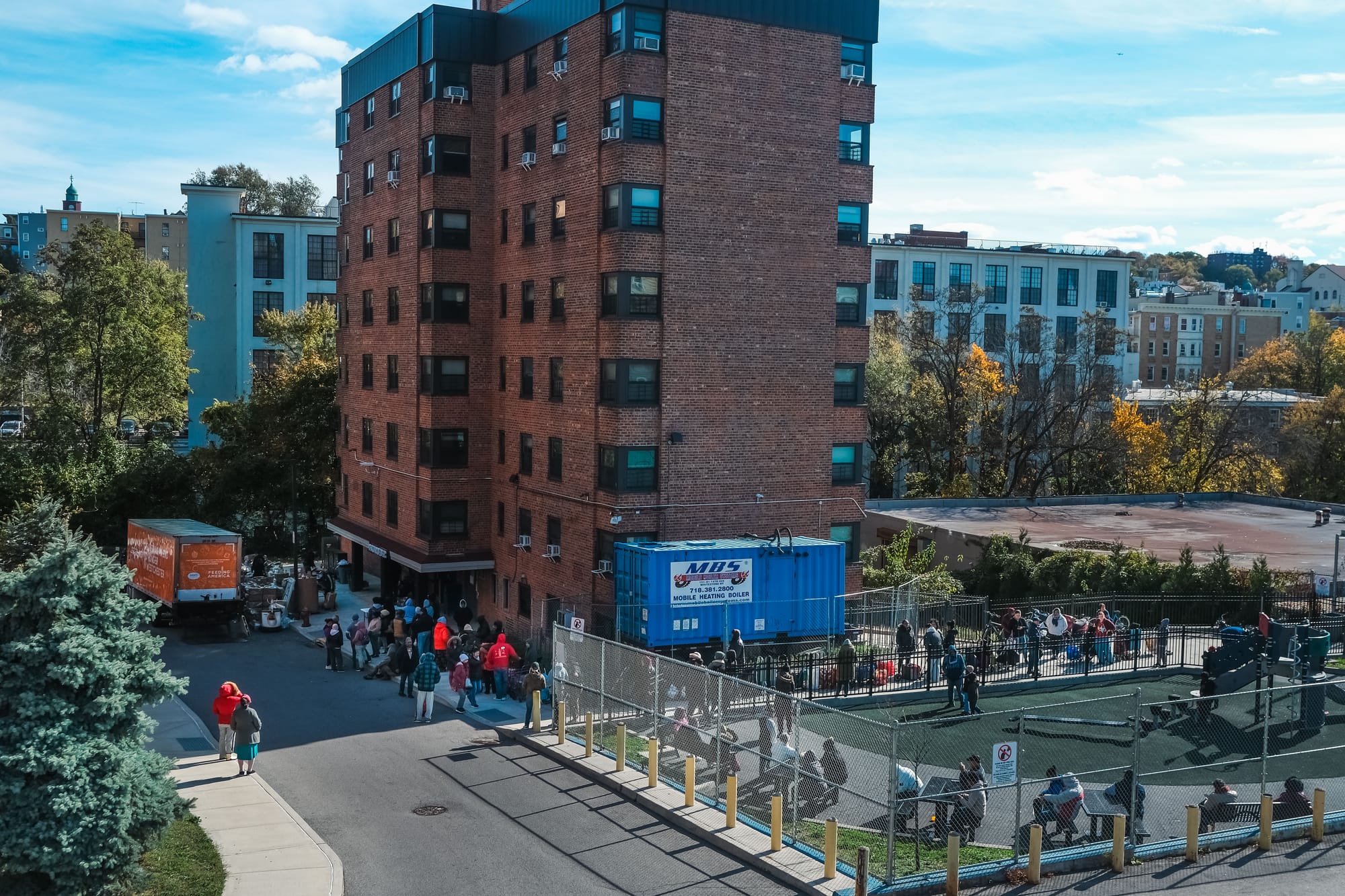
Feeding Westchester is the local chapter of Feeding America, the leading charitable food network in the nation, with over 200 food pantries and partnerships with 60,000 food distribution programs that have delivered 5.7 billion meals, according to its website. In Westchester, the organization partners with 175 operations and delivers 21 million pounds of food annually.
Despite this vast network, community food pantries typically only have the capacity to support a finite number of families experiencing food emergencies in the communities they serve, and cannot fill the void left by changes at the federal level. The shutdown was only the latest stressor the organization has had to manage in the last few months.
Stress Before The Shutdown
Chief Operating Officer Tami Wilson says that since March 2024, Feeding Westchester has lost about 2.3 million pounds of food. "We’ve lost $4 million from March 2024, 1.3 million pounds of food, when the egg problem was happening. We were expecting that [food] in this fiscal year. We did not receive it. So we lost it last year, and we did not receive it this year, so we were already down," Wilson said during the press event at Yonkers City Hall.
"We’ve been looking at this since March, when we lost over a million pounds worth of food. We heard what happened with the H.R.1 bill (One Big Beautiful Bill) in July. We knew that some things were coming. We weren’t prepared for [the shutdown], but we are continuing to work hard, work with our community partners, government officials, neighbors, donors, everyone. Everyone has been wonderful, but everything is needed. More is needed," she said.

The "One Big Beautiful Bill cut trillions of dollars from the public welfare programs, including $186 billion to SNAP and $800 billion to Medicaid, to offset the tax cuts to the wealthiest Americans. Before the passage of the bill, the Center for American Progress estimated that New York's congressional District NY-16, which includes Yonkers, stood to lose insurance coverage for 30,000 people and SNAP benefits for 26,000 individuals.
Feeding America's Mind the Meal Gap annual report, released in May, states there are "multiple factors that lead to food insecurity, creating a cycle that can be hard to break." That includes "household income, expenses, access to affordable health care, and the surrounding social and physical environment."
During the shutdown, Democrats tried to delay a vote on a Continuing Resolution to temporarily fund the government in hopes of renegotiating further cuts to healthcare subsidies and tax credits central to the Affordable Care Act. They ultimately gave in to Republicans once SNAP funds lapsed without any concessions, despite emergency reserves available in case of a shutdown. Now that the government showdown has ended and SNAP funding is being restored, recipients will have to navigate the changes to food assistance eligibility and skyrocketing healthcare premiums. This will create a new pain point that many additional households will have to manage.
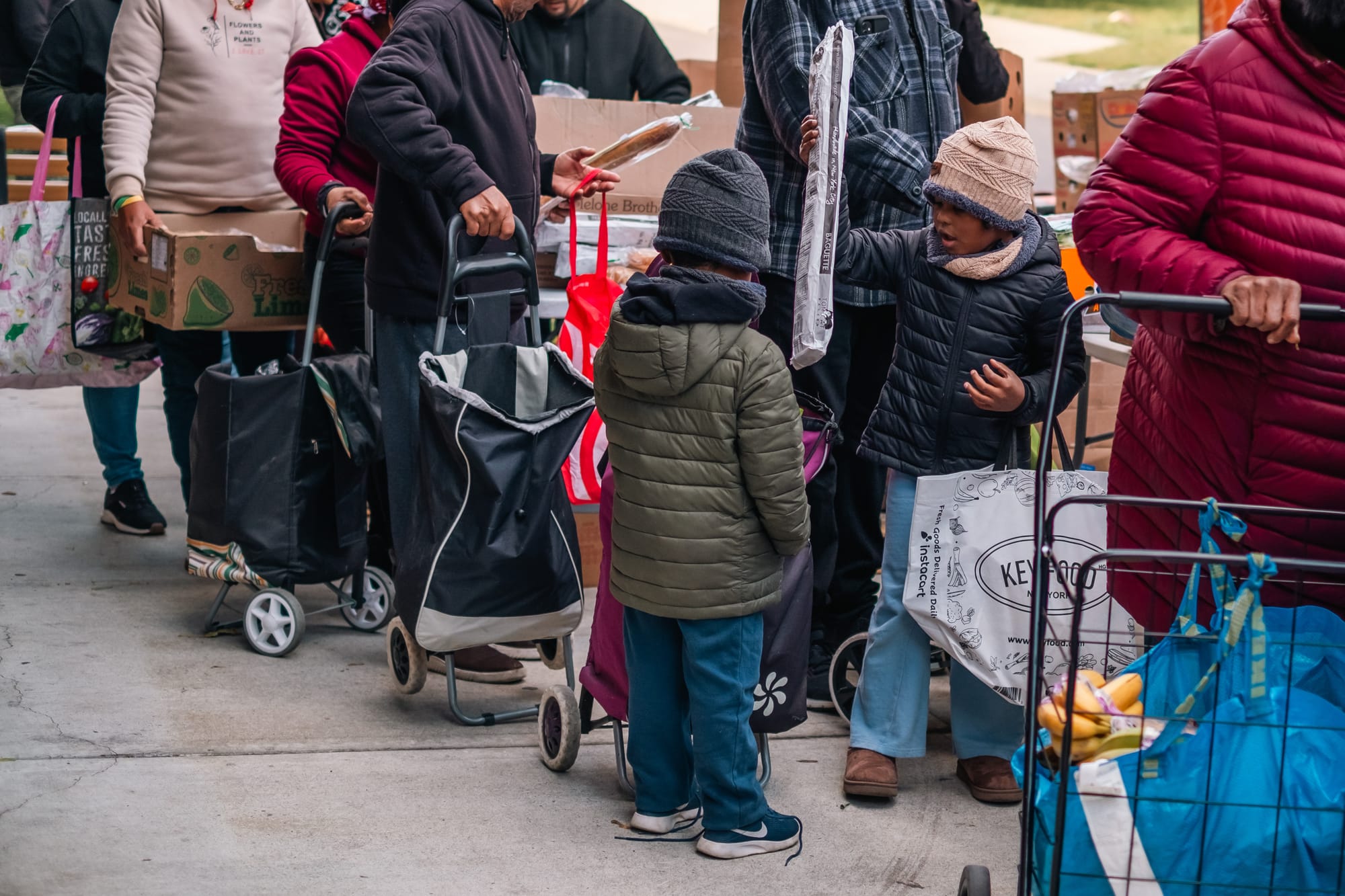
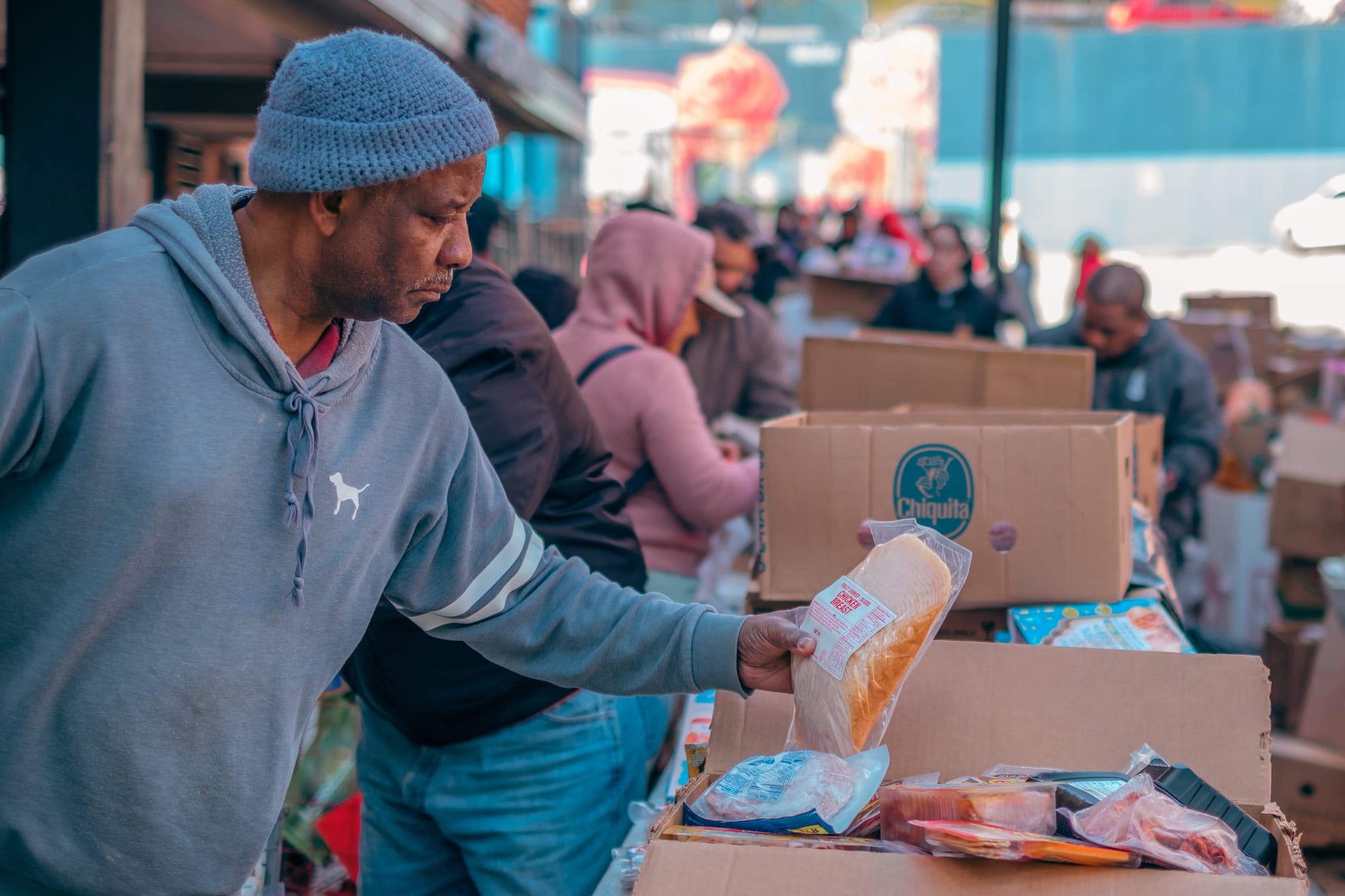
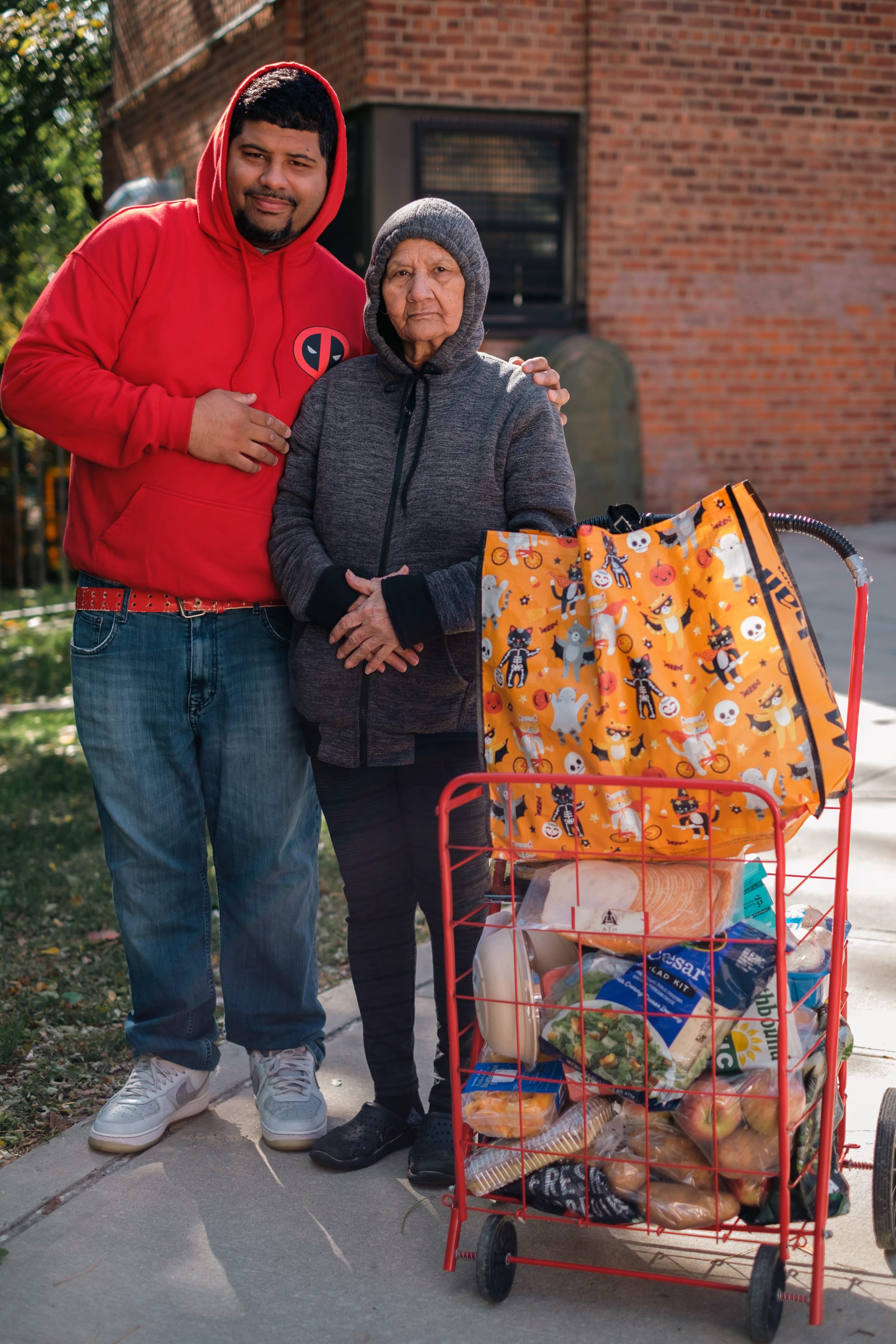
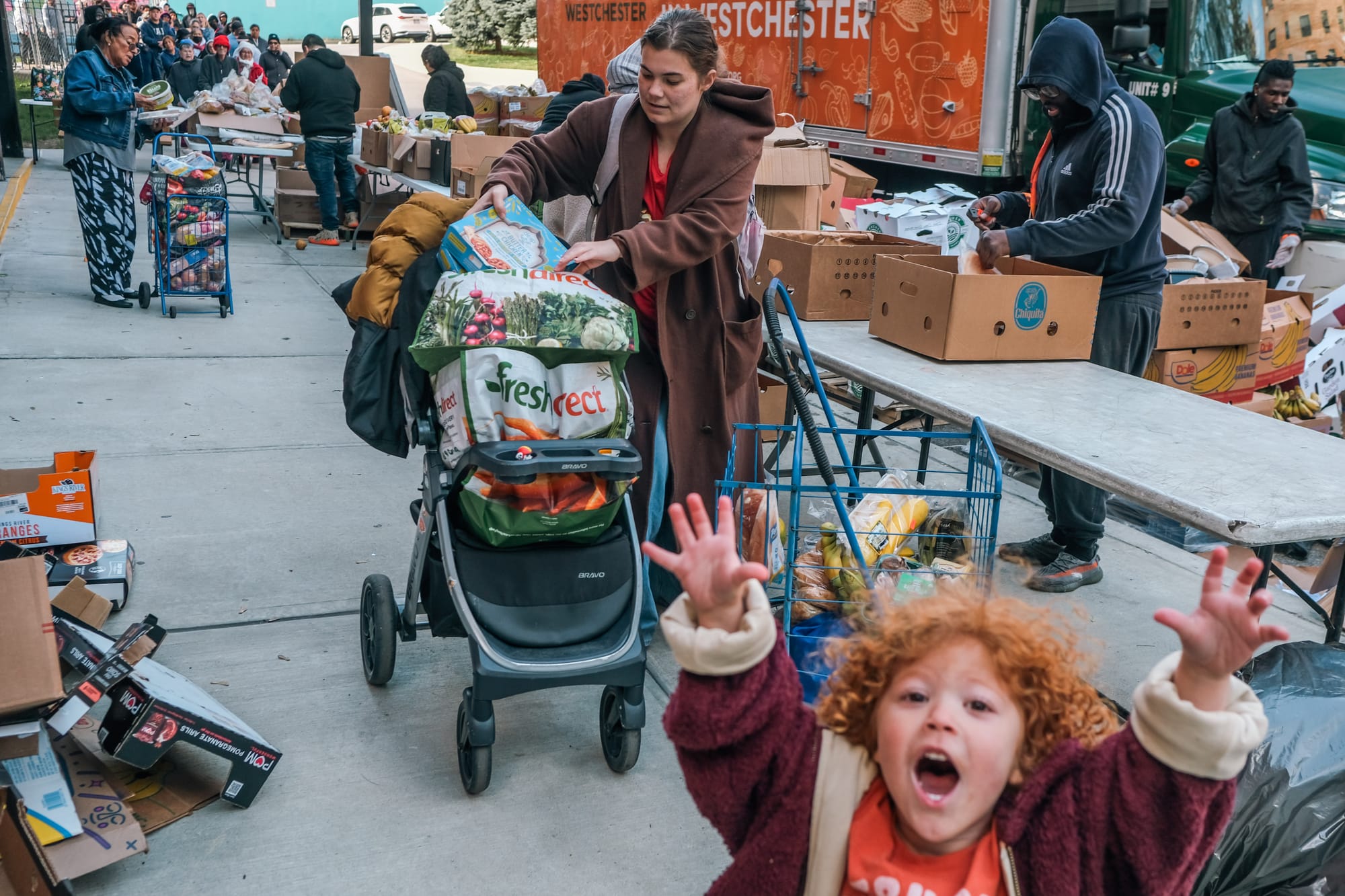
Instead of prepackaged boxes, local residents browse an arrangement of donated supermarket goods arranged by bread, fruits and vegetables, and meats, which they are free to choose from.
ALICE in a Scarce Wonderland
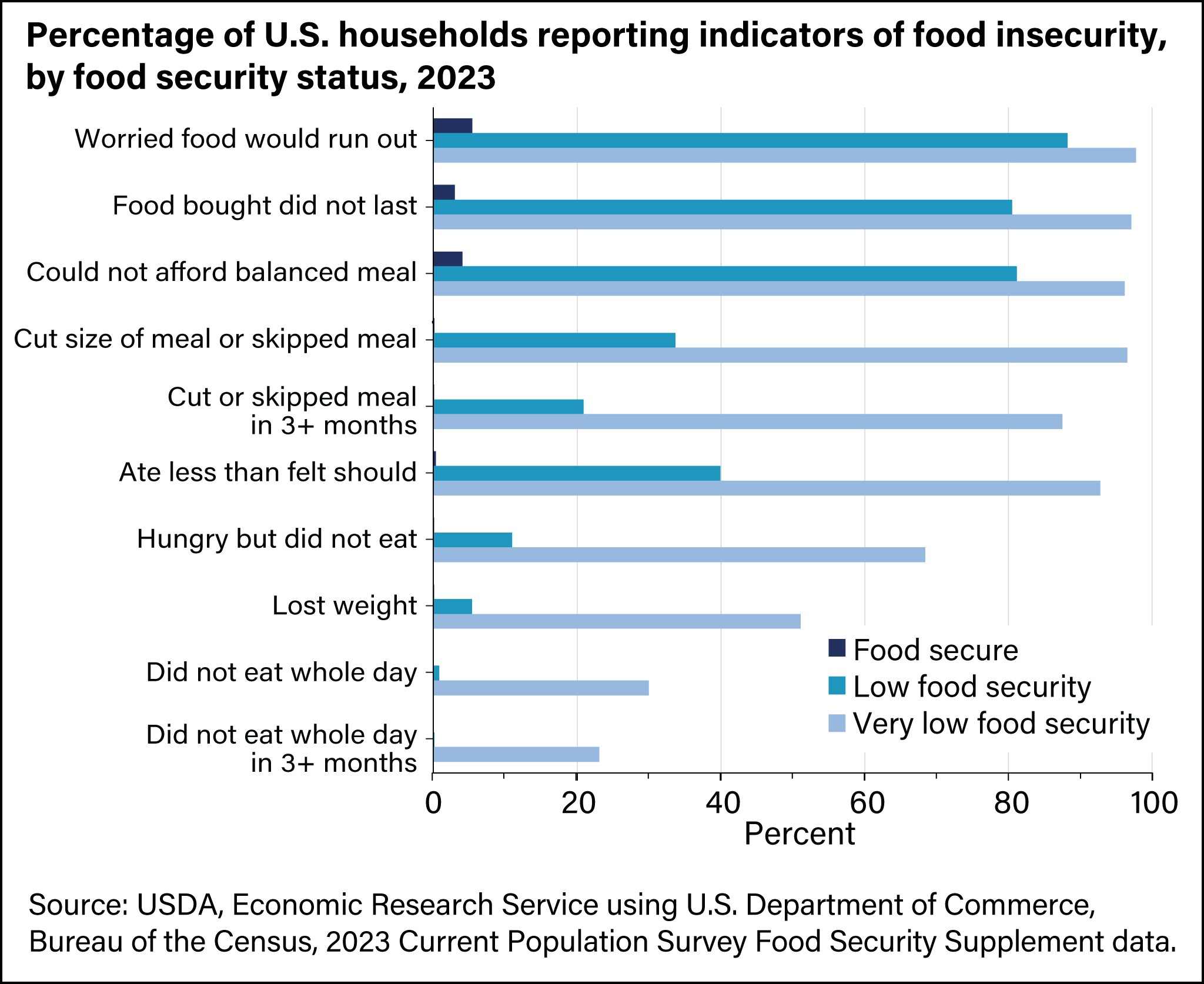
For years, residents of Westchester have been struggling with "food insecurity", which the US Department of Agriculture defines as the "economic and social condition of limited or uncertain access to adequate food”. In 2019, Westchester data from the Current Population Survey and USDA estimates calculated a food budget shortfall of $47.6 million for the region. In 2023, that figure ballooned to $86.1 million. As wages trail behind inflation and tariffs increase the cost of living, poverty levels no longer paint the full picture of hardship as a new economic landscape emerges.
ALICE, or Asset Limited, Income Constrained and Employed, is a categorization of households and the financial hardships they face. The economic tier was developed by United For ALICE, a research organization led by the United Way of Northern New Jersey, combining the grassroots research efforts of dozens of local United Way operations, corporations, and nonprofits from across the country. Together, they have devised a new term that represents households that earn too much money to qualify for government assistance, but struggle to meet their basic needs.
The 2025 Westchester ALICE report states that while 10% of households fell below the poverty line in 2023, an additional 28% of families fell below the ALICE threshold. That means a total of 38% of households in the county struggle to make ends meet, bringing more specificity to the image of who may be struggling to secure the essentials like housing, child care, food, transportation, health care, and a basic smartphone plan.
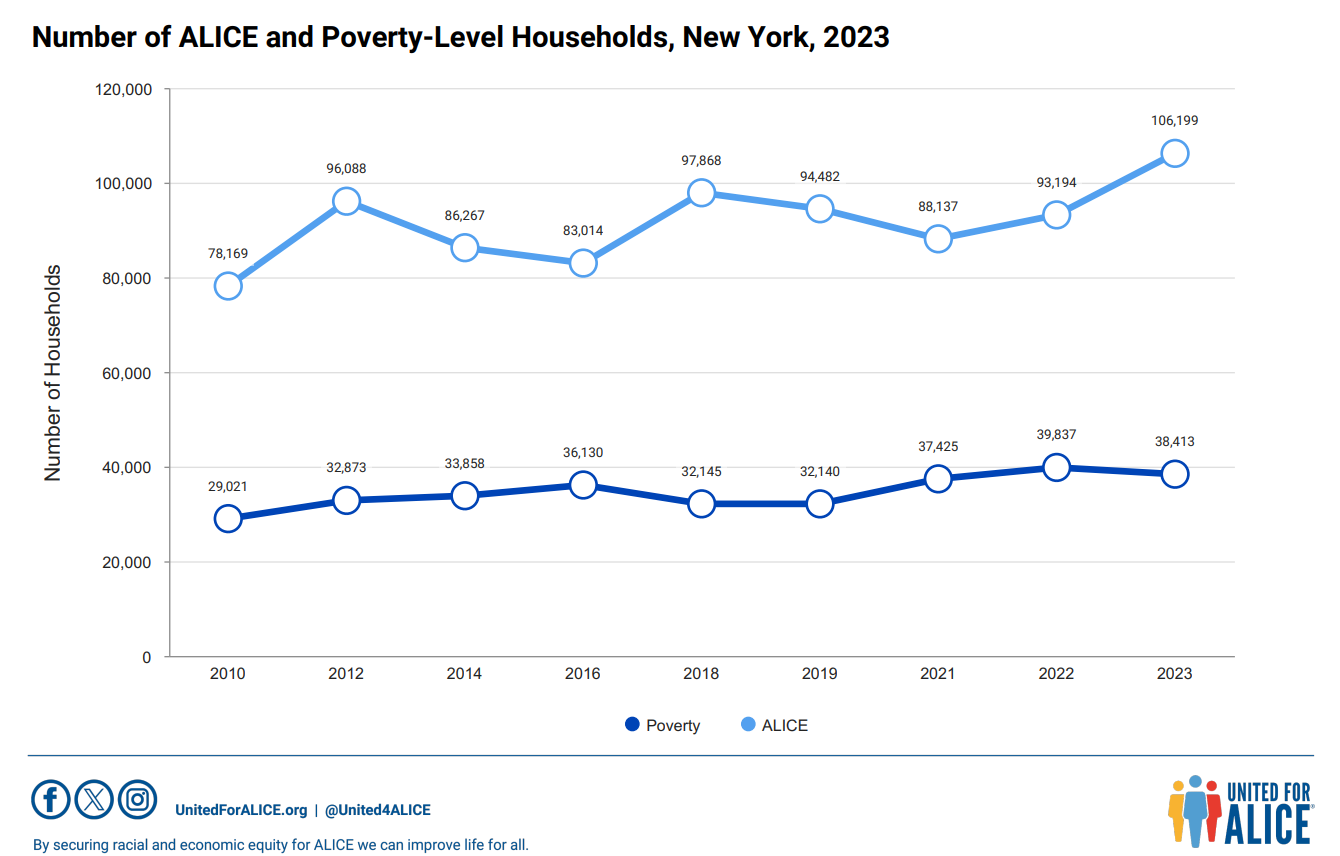
“When we underestimate how many households are struggling, we underestimate what it truly takes to build thriving communities,” said United For ALICE President Kiran Handa Gaudioso. “This means entire families and essential workers may be overlooked for support, left without the resources they need to stay healthy, achieve financial stability, and reach their fullest potential. That’s a loss not just for ALICE, but for all of us.”
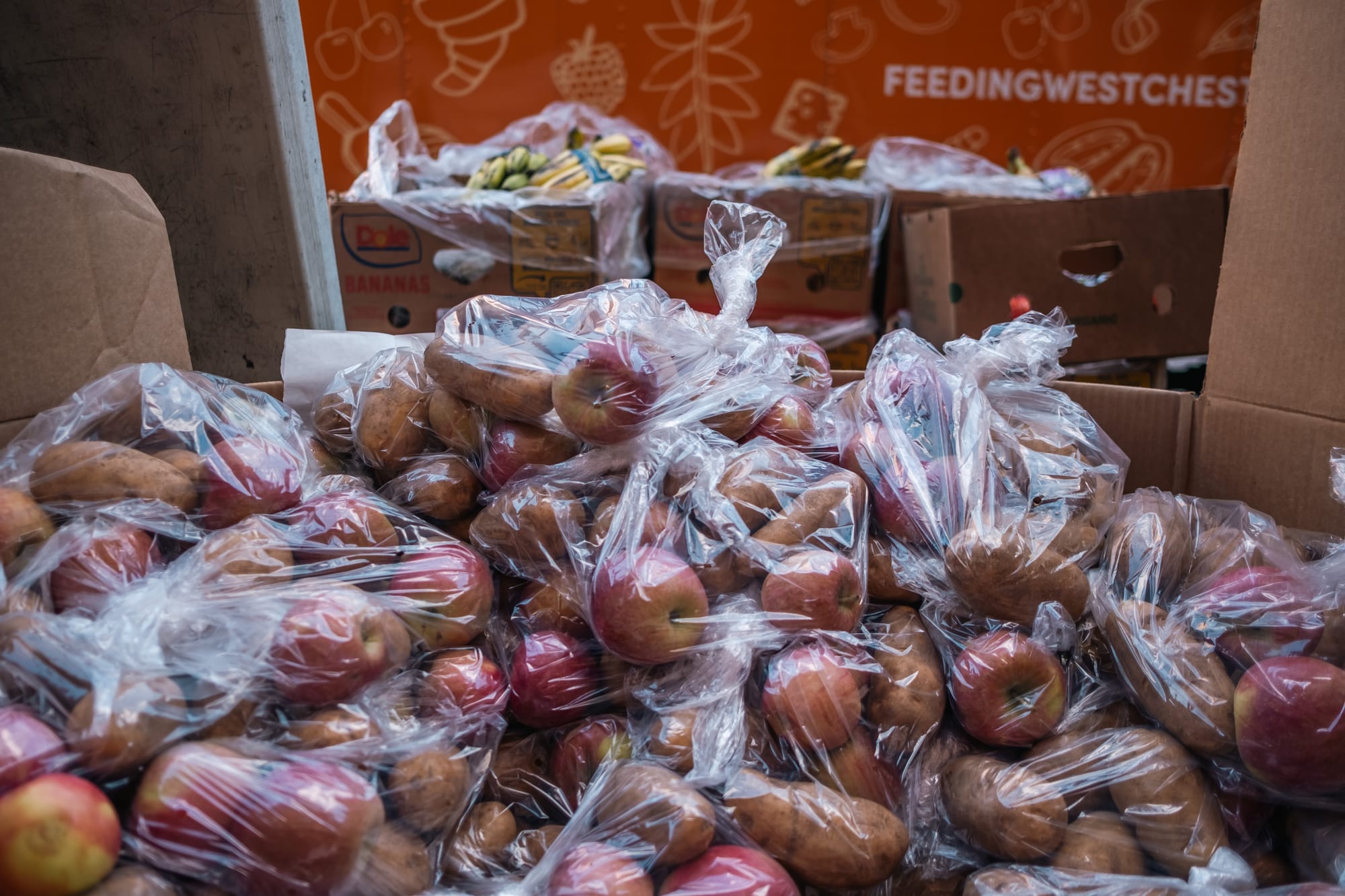
Produce packaged for mobile food distribution (Photo by Melissa Bunni Elian/The Leveler News)
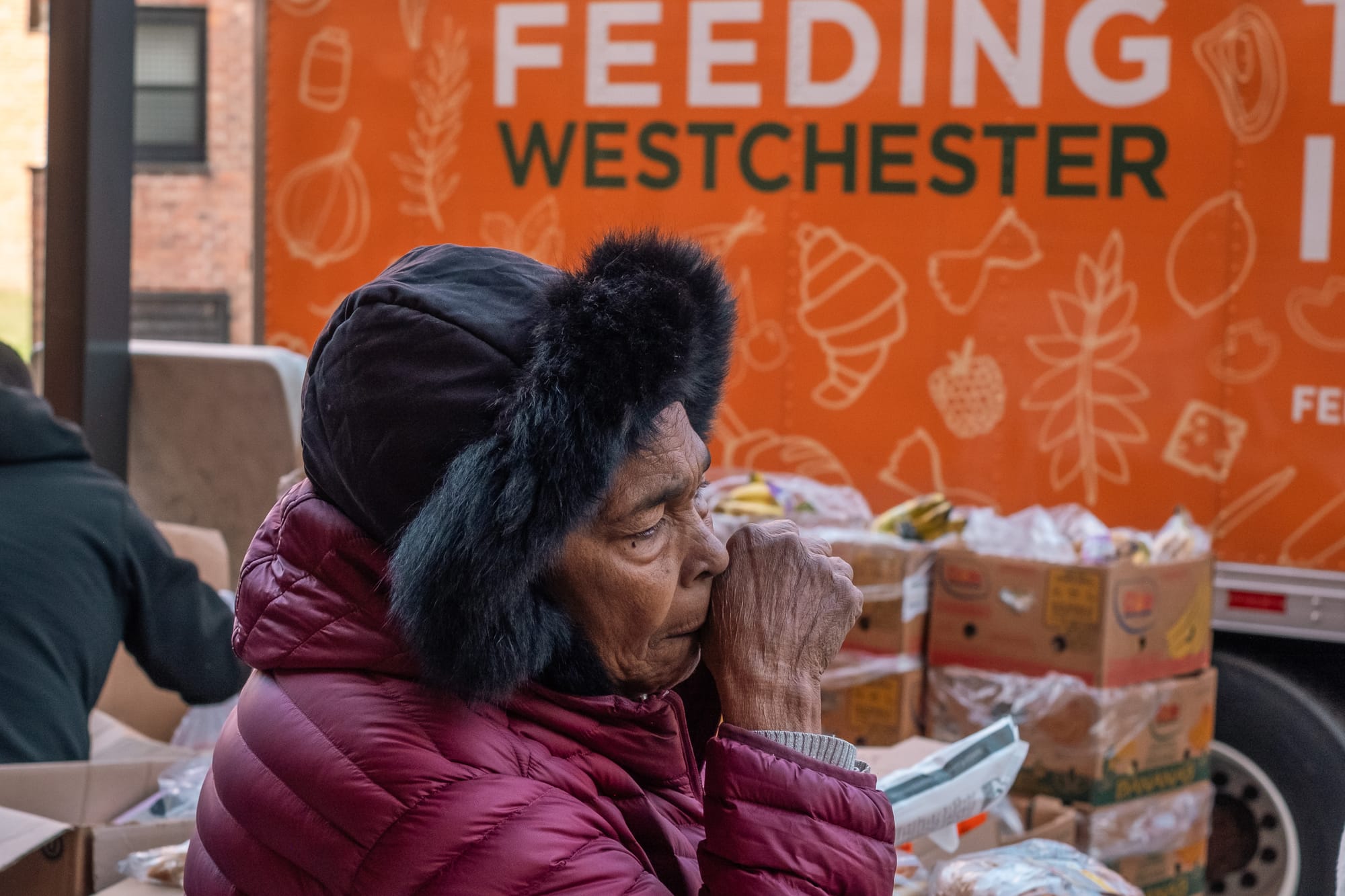
The chaos of the shutdown is over, the Yonkers food drive has ended, and recovery is underway, but the growing need for extra support is unlikely to slow down. Yonkers delivered over 400 Thanksgiving dinners to needy families in the city with the help of private donors. Westchester County sent an additional $50,000 to Feeding Westchester during the shutdown, but the data suggests that a sustained expansion of the social safety net is warranted at a time when it's shrinking.
“Pray for our neighbors," Tami Wilson said during the press conference. "That level of stress and anxiety, even when the government opens, doesn’t magically go away... We'll have to wait and see how long it actually takes to start up again. People have to catch up."